Showing posts with label London. Show all posts

Thursday, 16 May 2013

Brixton Boxes

I bumped into this pile of empty boxes in Brixton market in London. Just look how many countries they come from:

The pile of boxes

This one came all the way from Jamaica

This vegetable box hadn't travelled far. It was from the UK.

Columbian cassava

I think these cucumbers were German

Cyprus


This fish came all the way from Yemen


Ghanaian yams

Green bananas (matoke) from Uganda

Fruit from Pakistan

Mangoes from the Dominican Republic

British chicken


Monday, 13 May 2013

The other Somalia Conference


Here is a From Our Own Correspondent I did for the BBC about the 'real' Somalia Conference. You can listen to it here. It's the one broadcast on 11 May 2013.

(INTRODUCTION) On Tuesday May 7 2013, delegates from more than fifty countries and international institutions gathered at Lancaster House in London for a big conference on Somalia. It was hosted by the British Prime Minister, David Cameron, and the new Somali president Hassan Sheikh Mohamud. The conference ended with donors promising support for efforts to transform Somalia from conflict-ridden ruin into a functioning nation state. But Mary Harper felt that it was another Somali event, also held in London, that deserved the attention:

The day after the Somalia Conference. The heads of state had made their speeches. Hundreds of millions of dollars/ pounds of extra money had been pledged. The journalists had packed up their cameras and tape recorders. The cleaners were vacuuming the corridors of Lancaster House.

But in another equally glamorous location, another Somalia Conference was taking place. And this was the one that, in many ways, really mattered. Because this was about business and investment.


The British Museum - home to ancient and precious objects from all over the world - was an odd choice of venue. Somalis are traditionally a nomadic people. Apart from livestock, the less you have in terms of material possessions, the better.

This also applies to the Somali business community, a super-globalised group who travel the world, living out of suitcases and making money.


They were there in force in the British Museum. As were the Americans, the Europeans and the Arabs, all keen for a stake in Somalia.  A country that has been at war for more than two decades, its cities smashed to rubble, needs new buildings, roads, electricity and water. And it's in a part of the world where fresh reserves of oil and gas are being discovered.

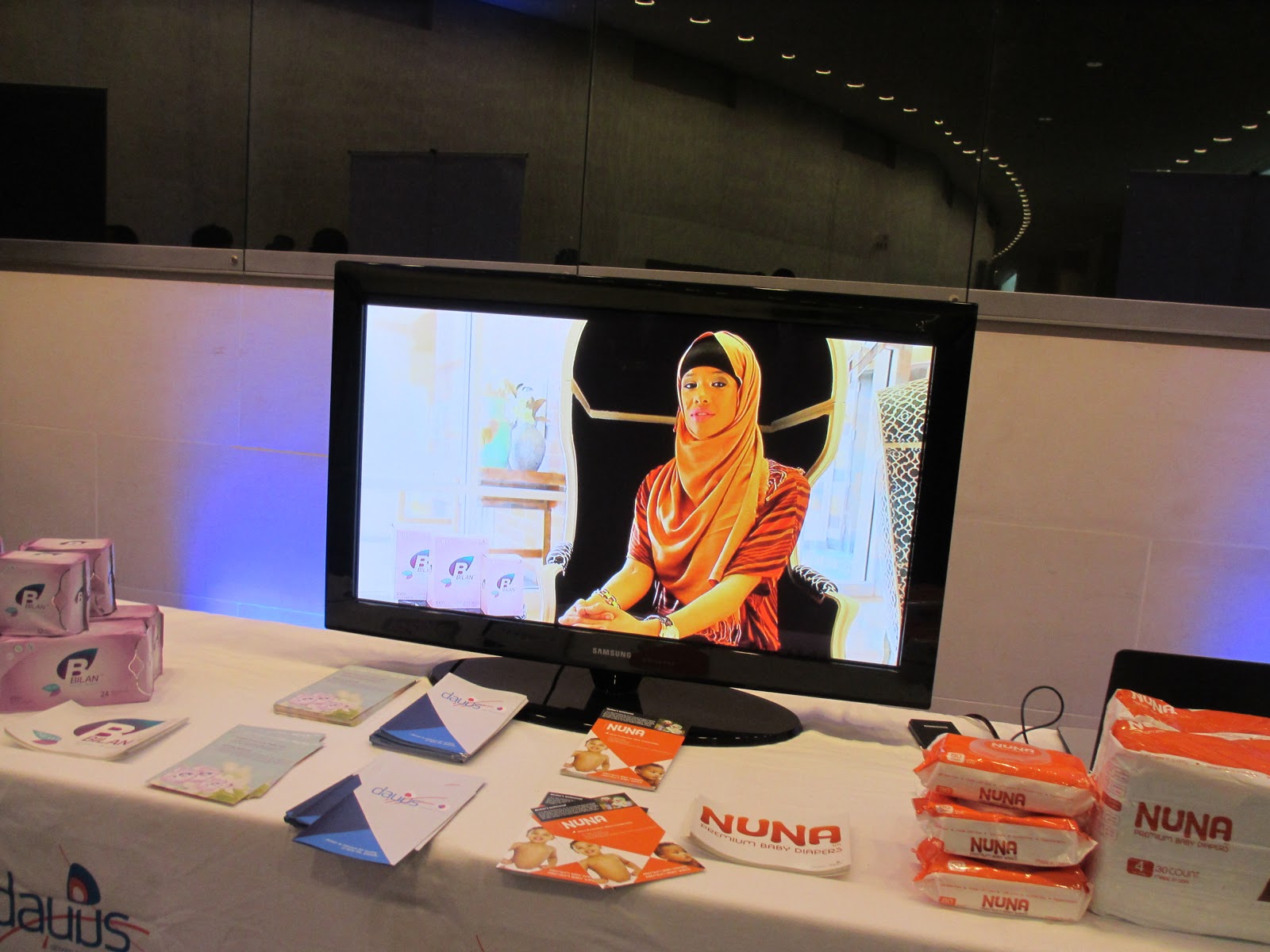
The first thing that caught my eye was an enormous orange banner with a picture of a fat smiling Somali baby wearing nothing but a nappy. Standing in front of it was a smart young Somali in a shiny suit. His name was Mohamed. And he was selling nappies. Made in America. Sold in Somalia.


Mohamed


The company was set up by a group of Somalis living in Minnesota in the United States - home to a huge community of Somali refugees. It was inspired by a young Minnesota-based Somali woman who, every time she went to Somalia, got frustrated by the lack of nappies, sanitary pads and other such items.


So, like a good Somali, she saw an opportunity. The products have Somali names and images. They are a Somali brand. And they are selling like crazy in Somali towns.
Mohamed told me that a recent study found that thirty per cent of teenage girls in Somalia miss school for a few days every month when they have their periods. The products he sells means they don't have to miss school any more.


I could have talked to Mohamed for hours, but I was interrupted by a tap on the shoulder. Someone wanted to introduce me to another Somali entrepreneur called Faisa.

Faisa is small, dainty and extremely pretty. Her leopard skin headscarf made her golden skin glow even more, lips painted a bright and shiny red.

Fails
She was bubbly and dynamic and had a strong Yorkshire accent. She told me how her family had fled Somalia when civil broke out in 1988. They ended up in the British town of Sheffield in South Yorkshire, hence the accent.


Faisa is doing the opposite of Mohamed. She is exporting goods from Somalia to Europe, the Gulf and elsewhere.

Although it is best known for conflict, famine, piracy and extremism linked to Al Qaeda, Somalia also exports more live animals than any other country in the world. Sheep, goats, cows and camels.

Because Somalia is so hot, the animals have thin skin. This means the leather they produce is of the finest quality, and is used to make fine, supple, soft leather goods such as gloves and handbags.

So this dainty young lady from Sheffield is in talks with some of the world's most prestigious leather companies. She was born in the Somali town of Burao, famous for its livestock. And she knows all about animals and their hides.

She rattled off a long list of tanning methods, and told me her company is investing in a Somali tannery, so the hides can be properly treated at source, instead of the current salt and sun drying method.

But Faisa hasn't stopped at leather. Somalia is also home to special trees whose sap produces frankincense and myrrh. For centuries, these have been exported from Somalia for use as incense in mosques and churches, for perfume, cosmetics and other purposes.
It is currently exported in its raw form. Faisa wants to purify it in Somalia, so more of the profits stay in the country.

After meeting Mohamed, Faisa and many others like them, I wondered why the speeches and politics of the previous day had got all the attention. They felt like a lot of hot air. Unlike the Somali company selling affordable nappies and sanitary pads in Somalia where they are much needed. Or the fine gloves, bags, coats and shoes being made from Somali leather. These felt like real things bringing real benefits. Not just to Somalis but to many other people too.

Sunday, 28 April 2013

Somalia Conference in London (Take Two)

It feels a bit like déjà vu. It feels a bit like last year. Another big Somalia Conference is being held in London - last year it was on February 23, this year it's on May 7. It's being held in the same venue, Lancaster House and, just like last year, lots of heads of state and other bigwigs have been invited.

British officials keep telling me this conference is different. Unlike the one last year, which was hosted by the British prime minister, David Cameron, this one will be hosted by both Mr Cameron and the (relatively) new Somali president, Hassan Sheikh Mohamud.

Some British officials are so keen to stress that the conference is, in part at least, 'Somali owned' that large Somali flags emblazon the bottom of their emails. Sometimes I get confused, and think I have received an email from someone in the Somali government, not the British one.


Somali flags emblazon the bottom of emails from British officials

And, just like last year, the UK has caught Somali Fever. A seemingly endless series of Somali-related events has been organised, ranging from posh dinners with the president to angry protests by angry self-declared Somali states.

The conference itself has three main aims:

1. The Somali government is expected to 'share its plans' for developing Somalia's military, police, justice sector and public financial management systems.

2. The 'international community' is supposed to reach an agreement on how to support the implementation of the Somali government's plans.

3. The Somali government is expected to outline how it plans to resolve the outstanding political issues within Somalia (does this include Somaliland, or does it refer to other 'issues' including Jubbaland, Puntland, Galmudug, Khatumo State, areas controlled by Ahlu-Sunna-wa-Jamaa, areas controlled by Al Shabaab, areas occupied by pirates, areas 'secured' by Ethiopians, Kenyans, Burundians, Ugandans, Sierra Leoneans, Djiboutians, Nigerians, Bancroft, etc, etc?).

The conference is also expected to:

4. 'Welcome' dialogue between 'the Federal Government of Somalia and Somaliland' to 'build trust and cooperation. (The two presidents met recently in Turkey, but Britain has been finding it difficult to convince Somaliland to come to the conference).

5. Endorse the UN Security Council resolution which extends the mandate of AMISOM forces in Somalia.

6. Endorse another UN resolution mandating a new UN mission for Somalia. (I wonder what will happen to the head of UN mission, Augustine Mahiga?)

7. Agree what it calls a 'package of support' for Somalia on preventing sexual violence. (Remember a Somali woman was this year jailed in Mogadishu for saying she had been gang raped by members of the Somali armed forces - she has since been cleared of the charges and released. One of her alleged crimes was insulting the government.)

8. 'Hear the latest' on the Somali government's maritime strategy.

9. 'Emphasise the importance of the orderly and voluntary return of refugees to Somalia' and 'look forward' to an event on this issue to be hosted by Somalia, Kenya and the UN. (Kenya last year ordered Somali refugees to leave urban areas and go to the huge Dadaab camp in the east of the country. The UK, US and other countries are also hotting up on efforts to deport Somalis.)

Of course, the conference will have to have an 'outcome'. I expect the 50 or so countries and organisations will pledge their support for the initiatives discussed in Lancaster House, and perhaps offer some more money. But Somalia is featuring in so many big international events this year, that the London Conference will probably only be able to offer a relatively small slice of the cake. Other pledges and financial commitments have to be saved up for the other big meetings later this year, including the Tokyo conference on African development and an EU conference on a new deal for fragile states (which Somalia has already embraced).


Thursday, 7 March 2013

Somali Talk in Whitechapel


I am speaking about my book and other Somali issues from 1-2.30 pm on Saturday 9 March at The Idea Store in Whitechapel. The address is 321 Whitechapel Road, London E1 1BU.

Please come if you can. Light refreshments will be provided and copies of my book will be available for sale and signing.

More details are available by clicking here: Idea Store Events

The event went very well, with lots of lively discussion afterwards, especially about the role of women in Somali society. 


Thursday, 21 February 2013

Interviewing the president of Somalia

On Sunday February 3, I was invited to The Dorchester Hotel in London to interview the Somali president, Hassan Sheikh Mohamud. 

I could tell an important Somali was staying in the hotel way before I entered its doors. The nearby streets were full of Somalis, and this was a part of London not normally frequented by large crowds of Somalis. Inside the hotel, guests seemed somewhat bewildered by the fact that all the seats in the foyer were occupied by Somalis. The security guards also looked a bit perplexed.


Somalis take over the foyer of The Dorchester Hotel
I met several good friends in the foyer, and after some lively chats, I was invited up to the president's room. He was generous with his time, so I did quite a long interview with him. I also gave him a copy of my book on Somalia.

You can listen to the version of the interview played on the BBC by clicking here.

To listen to the full version of the interview - nearly 20 minutes - please click here.

Interviewing Hassan Sheikh Mohamud for the BBC

The Somali president with my book