Showing posts with label Somalia. Show all posts

Saturday, 21 March 2015

My Latest Mogadishu Photo Album


Here are some of the photos I took on my latest trip to Mogadishu

A sunny day in Mogadishu 

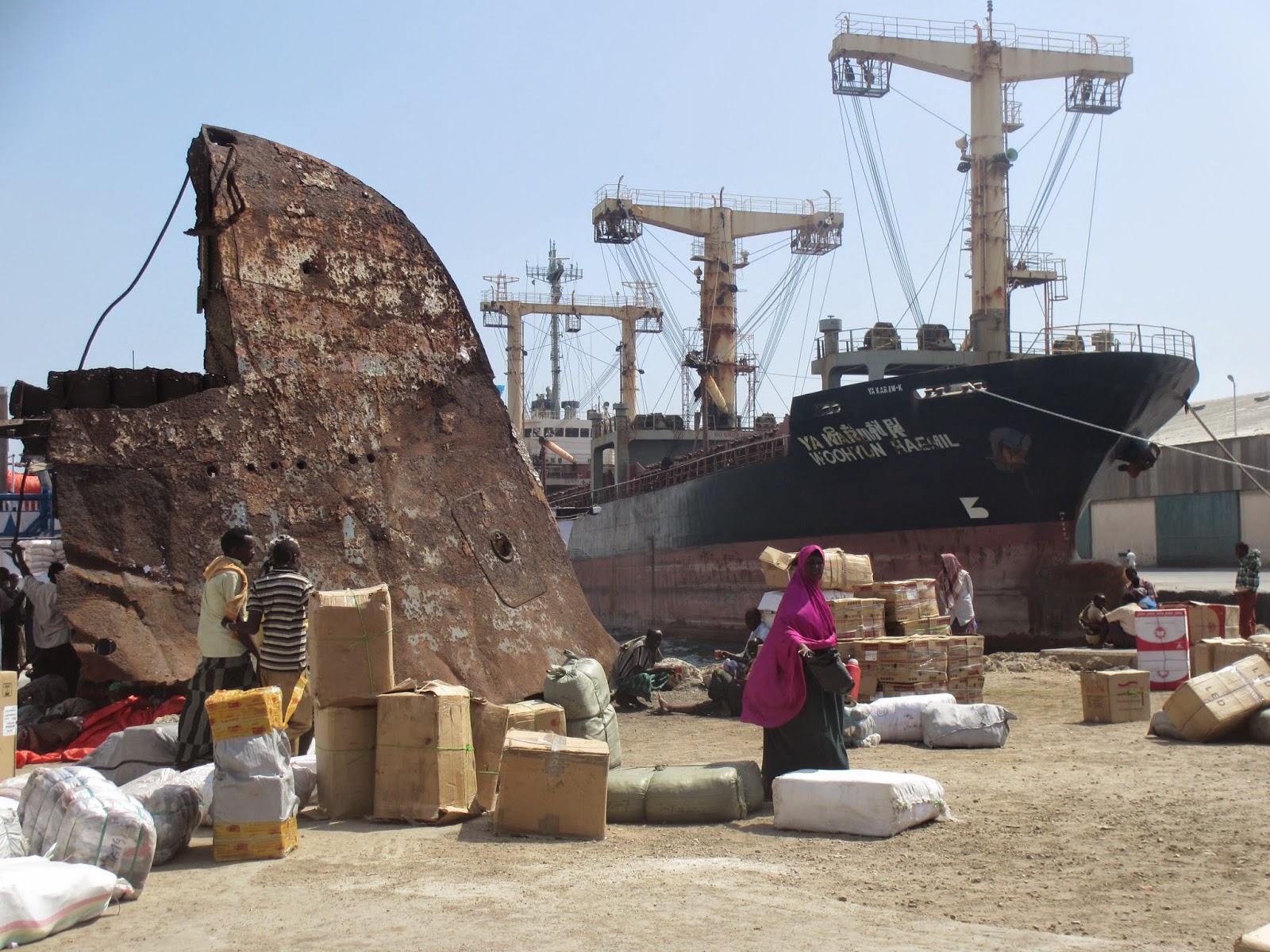
Mogadishu port is open for business

Dhow - many of the sailors are Gujaratis and Yemenis - many carry goods from Dubai.


The port is being run by a Turkish company


Mogadishu's first apartment blocks

I hope this will one day be my apartment (if I can afford it) 
My future Mogadishu jacuzzi 
Pakistanis putting in the lifts for the apartments
I got lost in Villa Somalia - home of the government


Eventually I found my way to the president's office - these are the 8 Somalia's presidents
With President Number Eight - Hassan Sheikh Mohamud


Negotiating road blocks can be tiresome and time consuming


The Turks have fixed some of the roads. 


So taxis and wheelbarrows filled with fresh Afgoye fruit can move around...
 ....except during the frequent security alerts and lockdowns...

 ...which disrupt business and daily life. 


 If you look carefully you can see the people are wearing face masks..

,,,they are the suicide bomb cleaner-uppers... there was a huge suicide bomb outside the airport... they cleaned up the body parts, vehicle parts and other mess.

I didn't take this photo - a Somali journalist did.. It's of the aftermath of the same suicide blast (apparently the suicide driver was very young). I was told the white people come to the scene of suicide blasts and take bits of 'evidence' away. I don't know what they do with it. And I don't know who those men are - but here are lots of people like them 'behind the wire' at the airport. Some wear NATO uniforms and 'train' people. Others are private contractors.


Monday, 18 August 2014

Speaking to Al Shabaab

Here is a piece I did for the BBC about my communications with the Somali Islamist group, Al Shabaab.

You can read my report for BBC Online by clicking here.

And you can listen to my piece for BBC From Our Own Correspondent by clicking here.

Here is the script for my report:


Speaking to Al Shabaab

The other morning I woke up to a text message and missed call from Al Shabaab.  

As always, the message was written in perfect English. It informed me about a film Al Shabaab have made called Beyond the Shadows which, it said, gave an ‘accurate portrayal’ of what happened when French commandoes last year tried – and failed – to rescue a suspected French intelligence agent held hostage by the group.

I watched the film. Like some of the other material made by Al Shabaab's media arm, Al Kataib Foundation, it was slickly produced. It was like a cross between a video game and a war movie, and was full of suspense. It showed a drone hovering in the air, emblazoned with the words 'Eyes of the Crusaders'.


The drone showed in the Al Shabaab film

The film showed the bodies of white men, one with a crucifix around his neck.


It also showed an Al Shabaab fighter in full camouflage. He was wearing white plastic gloves.


The film contained the testimony of a man described as a spy. At the end of the movie it said the 'spy' had been executed.


A few days later I got another call from Al Shabaab. The clear, relaxed voice on the other end of the phone told me I was about to receive a text message about the group’s role in the killing of a senior police official in Somalia earlier that day. Sure enough, a few seconds later the text message arrived. Then came a second call to confirm I had indeed received the message.

This is the usual pattern. A call, a text message, then another call to check the message – or as Al Shabaab calls it – ‘SMS press release’ - has arrived.

Scrolling through these messages on my phone, I can chart the history of Al Shabaab attacks. Many of the recent ones are in Kenya. One five-part message, written in the style of a news agency report, claims responsibility for an attack on a restaurant in Djibouti, popular with foreigners. Or, as Al Shabaab calls them, ‘Western crusaders’.

I have seen Al Shabaab’s violence at close hand. Earlier this year, I was just a few buildings down from the Jazeera Palace Hotel in the Somali capital, Mogadishu, when it was attacked, first by one suicide car bomber, then another, who waited for the emergency services to arrive before driving his vehicle into them and the hotel to ensure maximum casualties.

The blasts from the exploding cars were huge. Bullets cracked down the street as the security forces tried to beat back Al Shabaab fighters who had come - in a minibus I was told - to try to storm the hotel.

In the middle of all this, the main target of the attack – a senior security official – came with his entourage to the place where I was. We set up a circle of chairs for them, and they sat there like statues, in stunned, stony silence.

I sometimes find it difficult to relate these acts of extreme and terrifying violence to the calm, measured voice of the Al Shabaab official on the other end of the phone, to the precise, clinical wording of those text messages.

What started as brief calls about particular attacks have over time developed into longer, wider discussions about the movement’s practices and philosophies. Sometimes there is room for debate. But when I ask about certain subjects, the treatment of spies or adulterers for example, the tone of voice changes. It becomes cold and mechanical, as if learned by rote.

I had the conversation about spies one lazy Sunday morning when I was still in bed. I got a call from Al Shabaab, and as I sat in my safe, comfortable bedroom, I heard about how, “if you are found guilty of spying, there is only one punishment. You will face the firing squad in a public place. Everybody must witness the killing of a spy. The spy must receive three, four or five bullets to the head.”

But perhaps the strangest conversation I had was one sunny day outside the British Houses of Parliament. I was due to attend an event there but as I was early, I was sitting in a park outside, in the shade of those grand buildings. My phone rang. I saw the words ‘Al Shabaab’ flash onto my screen.

What started as an update on the latest attack on the Kenyan coast ended up as a lecture about my faith. “Have you thought about the afterlife?” asked the official. “You know, Mary, you won’t be around in 20, 30, 40 years time. I seriously recommend you consider converting to Islam.”

This man seemed genuinely concerned, as he urged me in a gentle voice to take up the Muslim faith. All the time, images of people I know or have known, who have been caught up in Al Shabaab attacks, flashed before my eyes. Some of them are now dead. Others have suffered horrific physical injuries, like a politician I met whose body was ripped apart in an explosion. His black skin mottled with raw, angry, bright pink scars. His inability to hear anything because of the damage the blast had done to his ears.

Of those that don’t bear any physical scars, but who jump every time they hear a bang, even if it’s just a door. Who shudder when they walk past a parked car in Mogadishu for fear it might explode. Whose hearts miss a beat whenever someone they don’t know approaches them for fear they might be a suicide bomber. Who, like me, have received texts from Al Shabaab, only the nature of the messages is very different as they often contain death threats.

I never quite know when I am going to receive the next message from Al Shabaab. I might be on holiday with family, having supper with friends, when all of a sudden, a text message will burst onto my screen, bringing two very different worlds into sharp collision.


Sunday, 5 January 2014

From Somalia to Siberia… on ice… via Sweden.

Somalis are going to Siberia… on ice… via Sweden! They are going to be the first and only African team competing in the World Bandy Championships. 

I had the good fortune to visit Sweden to report on this amazing story for the BBC. 

I went to Sweden with two BBC colleagues, Tim Mansel whose idea it was and who was the producer, and Nick Woolley who directed, filmed and edited this wonderful film:


And here is a report I did for BBC TV:

My TV piece

Click on the link below for my radio piece:

My radio report

Here is a piece I wrote for the BBC's From Our Own Correspondent programme:

Bandy is not a game many people know. It’s basically ice hockey writ large – played outdoors on a sheet of ice the size of a football pitch. So the countries that win World Championships are generally those from the frozen north – places like Sweden, Finland and Russia. But in this year’s world championships beginning in January there’ll be a new contender. They won’t win many games. But they’re likely to win a lot of new friends. Mary Harper has just been to Sweden to meet the national bandy team of…Somalia.

There, stretching out in front of me is a giant, smooth sheet of ice. It’s the size and shape of a football pitch, with a little net goal at either end.

It’s night-time and the sky is pitch black. But the perfect white of the ice seems to glow from the inside, as it’s lit by floodlights which swing above it, stretched across on wires.

It’s still and quiet. I can just make out tall pine trees standing like silent guards around the pitch.

Suddenly the peace is broken.

Figures in bright colours swarm onto the ice. I hear the whoosh and scrape of skates. The thwack of wooden sticks hitting a ball. The occasional thump of a body coming down hard.


This is bandy, Sweden’s winter sport. It’s a bit like ice hockey. But played with a bright pink ball instead of a puck. And there’s that huge pitch, which the players whizz around in this fast and furious game.

The voice of the coach travels loud and clear through the night air. And it’s then I notice something strange. We’re in a small Swedish town, playing a very Swedish game. But the coach is the only white face on the pitch.

Everyone else is black. And they’re speaking a language I recognise. Somali.

This is the Somali National Bandy Team, and its headquarters is right here in the Swedish town of Borlenge. 

In a few weeks time, this team here on the ice is going to Siberia. To represent Somalia in the world bandy championships. The very first time an African country will do so.

Ahmed Hussein is a member of the team. He’s wearing a big red top that billows around his slight frame. He has an impossibly engaging smile, with deep dimples in his cheeks.

“I grew up in Mogadishu,” he says, “where the only thing I knew about ice was as something to put in my Coca Cola”.

From left to right: The producer Tim Mansel, bandy player Ahmed Hussein, cameraman and editor Nick Woolley and the man who dreamed up the idea of Somali bandy Patrick Andersson.
Ahmed tells me that a few months ago, not a single member of the team knew how to skate, let alone play bandy. How a man called Patrick came to him and a group of friends and told them about this weird game.

Patrick is standing on the sidelines. “I was worried about the segregation of the Somalis and Swedes in my town. There were riots across Sweden a few months ago in suburbs dominant by immigrants. Some time after that, I was having a few beers with friends when I came up with the idea of a Somali bandy team. This would get people talking to each other.”

Patrick, Ahmed and the Somali Bandy vehicle which zooms around Borlange


And it certainly is. Something especially important in a town like Borlenge, where close to 10 percent of the population is Somali, and growing every day as there are more than 30 new arrivals from Somalia each month.

A Somali community worker, Mursal Isse, takes me for a walk around the area where most Somalis live. “This is a Swedish Mogadishu,” he says.

'Sweden's Mogadishu' - the area in Borlange where most of the Somalis live

I see a woman in typical Somali dress. A long gown, a large veil. She’s holding hands with her small children. A boy and a girl, bundled up warm in thick snowsuits, their big brown eyes peeking out from tightly tied hoods.

“Aren’t your freezing?” I ask. Shyly, she lifts up the bottom of her veil. Underneath is a big black coat.

Even though it’s so cold and so quiet, so utterly different from Somalia, not one of the Somalis I meet complains about life in Sweden. Many talk of the value of a Swedish education, and the young are ambitious. One wants to be an architect, another a stockbroker.

This is very different from Britain where Somalis often talk of police harassment, of how some of their boys choose crime over school. Of course it’s not perfect in Sweden, but there are lessons to be learned.

Back on the pitch, I ask the coach, Per Hosshaug – a legendary bandy player and five times world champion – how he got the boys to this standard in such a short time.

“They have courage. They have lived through things we don’t even want to dream about. So getting on skates was nothing for them.”

As the team trains for Siberia, I notice a Somali teenager on the edge of the ice. He’s wearing skates, shuffling his way forward. This is the second time he’d ever tried.

A graceful figure glides towards him. Dressed all in black, a short, fur coat belted elegantly at the waist. A black hat decorated with a glamorous black flower. She takes the Somali boy’s hands, and pulls him forwards. Shows him how to skate.

The figure skater who teaches the Somalis how to skate
Like everyone else involved with the Somali bandy team, this Swedish figure skater is a volunteer. She’s going with them to Siberia.

They’re not going to win. They might not even score a goal. But that’s not the point. Something very special is happening on the ice in this small Swedish town, which has nothing to with winning or losing. It’s getting two very different communities to talk to each other, and to live together.

Monday, 24 June 2013

Somalia's lifeline under threat

I started this blog post in 2013, following a decision by Barclays Bank in the UK to close the accounts of Somali and other remittance companies. The problem has spread to other countries, most recently the US where on Friday 6 February 2015, the main bank providing services to Somali money transfer companies, Merchants Bank of California, closed their accounts.

Initially, the US-based Somali remittance companies suspended operations - but on 28 February they said they would restart operations, albeit in limited form. How will they do this?  By carrying cash. I have highlighted the relevant part of the press release.


          Statement of the Somali American Money Services Association.
                                      Press Release
 February 28, 2015

Since Merchants Bank of California terminated the accounts of Somali American Remittance Companies on February 6, transmission of family support money to the needy Somali people in East Africa grounded to a halt. Remittance companies lost the bulk of their wiring capabilities and were forced to drastically scale down their services in many states and completely shut down in many others.
For a long time, the Somali American Money Services Association (SAMSA) had been reaching out to US regulators, elected officials and other Government officials by warning of an impending humanitarian crisis in the Horn of Africa if the un-banking of remittance companies was not resolved. Unfortunately the situation appears to have come to the precipice SAMSA and its advocates have been warning of. SAMSA wishes to convey its utter disappointment that, at the moment, there is nearly no sustainable channel to wire money to the desperately poor people of Somalia – unless hundreds of millions of dollars a month are packed in suitcases and physically transported across continents.
In recognition of the magnitude of the problem, Members of the US House of Representatives and Senate met with the State Department and Regulatory Agencies on February 26, 2015 in an effort to find a solution to this critical problem. SAMSA wishes to express its dismay that this high profile meeting could not identify a single possible short term solution to this crisis. We wish to share not only our disappointment but our conviction that there is surely a way to maintain this lifeline to the Somali people.
For SAMSA members, remittance is not just a business; it is personal. We run a service that is the single most important component of the Somali people’s livelihood. For millions across East Africa, the $150-$200 a month remittance means the first and last line of defense against starvation and homelessness. It is what ensures the children we left behind continue to have food on the table. It is a vital bulwark against that next, ever-looming man-made famine.
Considering the magnitude of the potential humanitarian crisis, the Remittance Companies have resolved to resume their services in a limited capacity on March 1, 2015, even if it is only possible for a few weeks or months more with the unsustainable options that remain for transporting money. The plan is to utilize the last remaining option available to us (carrying cash abroad in person), no matter how unsafe or antiquated, to deliver money until it, too, is no longer available. In all likelihood, this desperate option will not last for more than a month or two, but it will be worth it if we can prevent an avoidable, artificial famine even for a day longer.  Not only is this method too costly and unsustainable, it also is likely to result in the loss of nearly 50% of transmissions, as Money Transfer Companies will stop operating in many regions due to the fact that it will be unrealistic to transport money from them. We estimate that, with the limited capacity, these efforts will result in the resumption of only about 50% of transmission volumes.
Meanwhile, SAMSA continues to believe in the willingness of the United States, its regulatory Agencies and elected officials to find a lasting solution to this problem. In Particular, US Treasury and State Department cannot afford to continue taking this lightly. It is our belief that the US Government does not intend for this money transfer shutdown, or its inevitable humanitarian, economic, security and political consequences, to transpire.
Finally, SAMSA wishes to appreciate the efforts of elected Members of the US House of Representatives, Senate and the Humanitarian Organizations that continue to advocate on behalf of the millions of Somalis who face an uncertain future without remittances.

END
Contact: Abdulaziz Sugule, 612-481-4446, amsassoc@core.com;

Aden Hassan, 651-434-3697, adenhassan@outlook.com


Saturday, 8 June 2013

Kismayo - The Somali Tinderbox?

This is a report I did for the BBC about the fighting in Kismayo, which erupted on 7 June 2103:

At least ten people have been killed in a second day of fighting in the southern Somali city of Kismayo, which is a crucial economic and strategic hub. African Union forces are trying to mediate between the rival militias, which are led by two self-declared presidents of the region, known as Jubaland. The Somali president, Hassan Sheikh Mohamud, has appealed for an immediate ceasefire. Mary Harper reports:

Residents of Kismayo say the fighting is intense. Militiamen are firing continuously from pick up trucks mounted with heavy weaponry. Hundreds of people are fleeing the city. The Somali defence minister is in Kismayo trying to resolve the crisis. He faces a near impossible task. Kismayo is a complex city, inhabited by some thirty different clans. All compete for lucrative port revenues, and access to land, the most fertile in Somalia. The fear is that more clans will start fighting, plunging the country back into civil war and giving the Al Qaeda linked group Al Shabaab an opportunity to retake territory lost in recent months. At least four men have declared themselves president of the region, none of them recognised by the Somali federal government. The situation is further complicated by the involvement of Kenya. There are more than four-thousand Kenyan troops in Kismayo as part of the African Union force, which provides security in some parts of Somalia. Kenya has been accused of following its own agenda in southern Somalia, supporting local militia leaders in order to set up a buffer zone between the two countries. This has led to tensions with the Somali federal government, which fears it is losing the region to a Kenyan backed group which does not respect central authority.

Events in Kismayo sparked a Twitter storm. You can read some of the Tweets here.

This report on Kismayo by the Mogadishu-based Heritage Institute for Policy Studies provides useful background: The Kismaayo Crisis: Options for Compromise


Kismayo-bound plane belching smoke from its back end

If you are planning on taking a trip from Mogadishu to Kismayo, it's probably best not to read this brilliant article by the Somali journalist, Hamza Mohamed: Pray before, during and after your flight.

Monday, 13 May 2013

The other Somalia Conference


Here is a From Our Own Correspondent I did for the BBC about the 'real' Somalia Conference. You can listen to it here. It's the one broadcast on 11 May 2013.

(INTRODUCTION) On Tuesday May 7 2013, delegates from more than fifty countries and international institutions gathered at Lancaster House in London for a big conference on Somalia. It was hosted by the British Prime Minister, David Cameron, and the new Somali president Hassan Sheikh Mohamud. The conference ended with donors promising support for efforts to transform Somalia from conflict-ridden ruin into a functioning nation state. But Mary Harper felt that it was another Somali event, also held in London, that deserved the attention:

The day after the Somalia Conference. The heads of state had made their speeches. Hundreds of millions of dollars/ pounds of extra money had been pledged. The journalists had packed up their cameras and tape recorders. The cleaners were vacuuming the corridors of Lancaster House.

But in another equally glamorous location, another Somalia Conference was taking place. And this was the one that, in many ways, really mattered. Because this was about business and investment.


The British Museum - home to ancient and precious objects from all over the world - was an odd choice of venue. Somalis are traditionally a nomadic people. Apart from livestock, the less you have in terms of material possessions, the better.

This also applies to the Somali business community, a super-globalised group who travel the world, living out of suitcases and making money.


They were there in force in the British Museum. As were the Americans, the Europeans and the Arabs, all keen for a stake in Somalia.  A country that has been at war for more than two decades, its cities smashed to rubble, needs new buildings, roads, electricity and water. And it's in a part of the world where fresh reserves of oil and gas are being discovered.

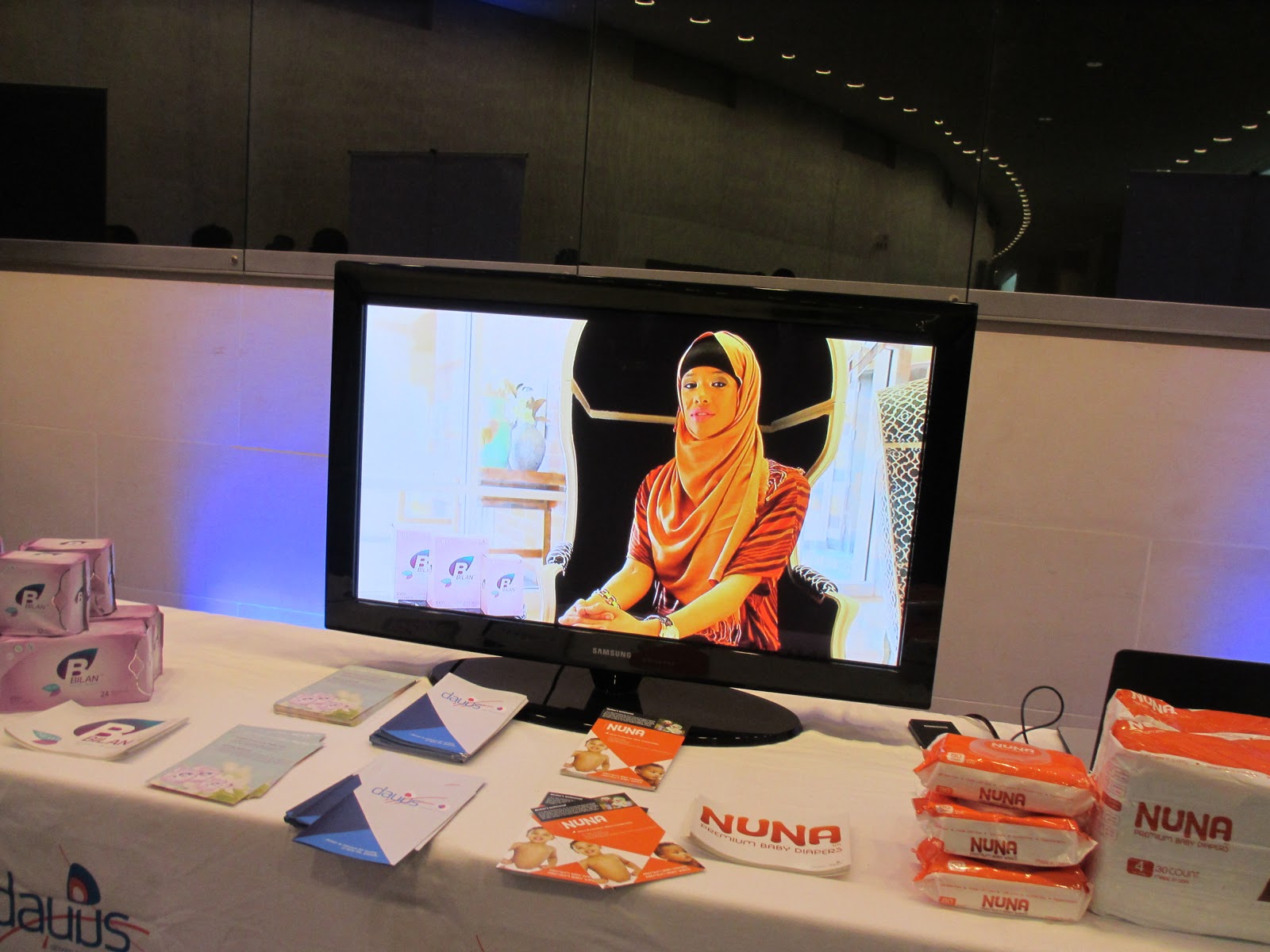
The first thing that caught my eye was an enormous orange banner with a picture of a fat smiling Somali baby wearing nothing but a nappy. Standing in front of it was a smart young Somali in a shiny suit. His name was Mohamed. And he was selling nappies. Made in America. Sold in Somalia.


Mohamed


The company was set up by a group of Somalis living in Minnesota in the United States - home to a huge community of Somali refugees. It was inspired by a young Minnesota-based Somali woman who, every time she went to Somalia, got frustrated by the lack of nappies, sanitary pads and other such items.


So, like a good Somali, she saw an opportunity. The products have Somali names and images. They are a Somali brand. And they are selling like crazy in Somali towns.
Mohamed told me that a recent study found that thirty per cent of teenage girls in Somalia miss school for a few days every month when they have their periods. The products he sells means they don't have to miss school any more.


I could have talked to Mohamed for hours, but I was interrupted by a tap on the shoulder. Someone wanted to introduce me to another Somali entrepreneur called Faisa.

Faisa is small, dainty and extremely pretty. Her leopard skin headscarf made her golden skin glow even more, lips painted a bright and shiny red.

Fails
She was bubbly and dynamic and had a strong Yorkshire accent. She told me how her family had fled Somalia when civil broke out in 1988. They ended up in the British town of Sheffield in South Yorkshire, hence the accent.


Faisa is doing the opposite of Mohamed. She is exporting goods from Somalia to Europe, the Gulf and elsewhere.

Although it is best known for conflict, famine, piracy and extremism linked to Al Qaeda, Somalia also exports more live animals than any other country in the world. Sheep, goats, cows and camels.

Because Somalia is so hot, the animals have thin skin. This means the leather they produce is of the finest quality, and is used to make fine, supple, soft leather goods such as gloves and handbags.

So this dainty young lady from Sheffield is in talks with some of the world's most prestigious leather companies. She was born in the Somali town of Burao, famous for its livestock. And she knows all about animals and their hides.

She rattled off a long list of tanning methods, and told me her company is investing in a Somali tannery, so the hides can be properly treated at source, instead of the current salt and sun drying method.

But Faisa hasn't stopped at leather. Somalia is also home to special trees whose sap produces frankincense and myrrh. For centuries, these have been exported from Somalia for use as incense in mosques and churches, for perfume, cosmetics and other purposes.
It is currently exported in its raw form. Faisa wants to purify it in Somalia, so more of the profits stay in the country.

After meeting Mohamed, Faisa and many others like them, I wondered why the speeches and politics of the previous day had got all the attention. They felt like a lot of hot air. Unlike the Somali company selling affordable nappies and sanitary pads in Somalia where they are much needed. Or the fine gloves, bags, coats and shoes being made from Somali leather. These felt like real things bringing real benefits. Not just to Somalis but to many other people too.