The Hargeisa International Book Fair: Day One
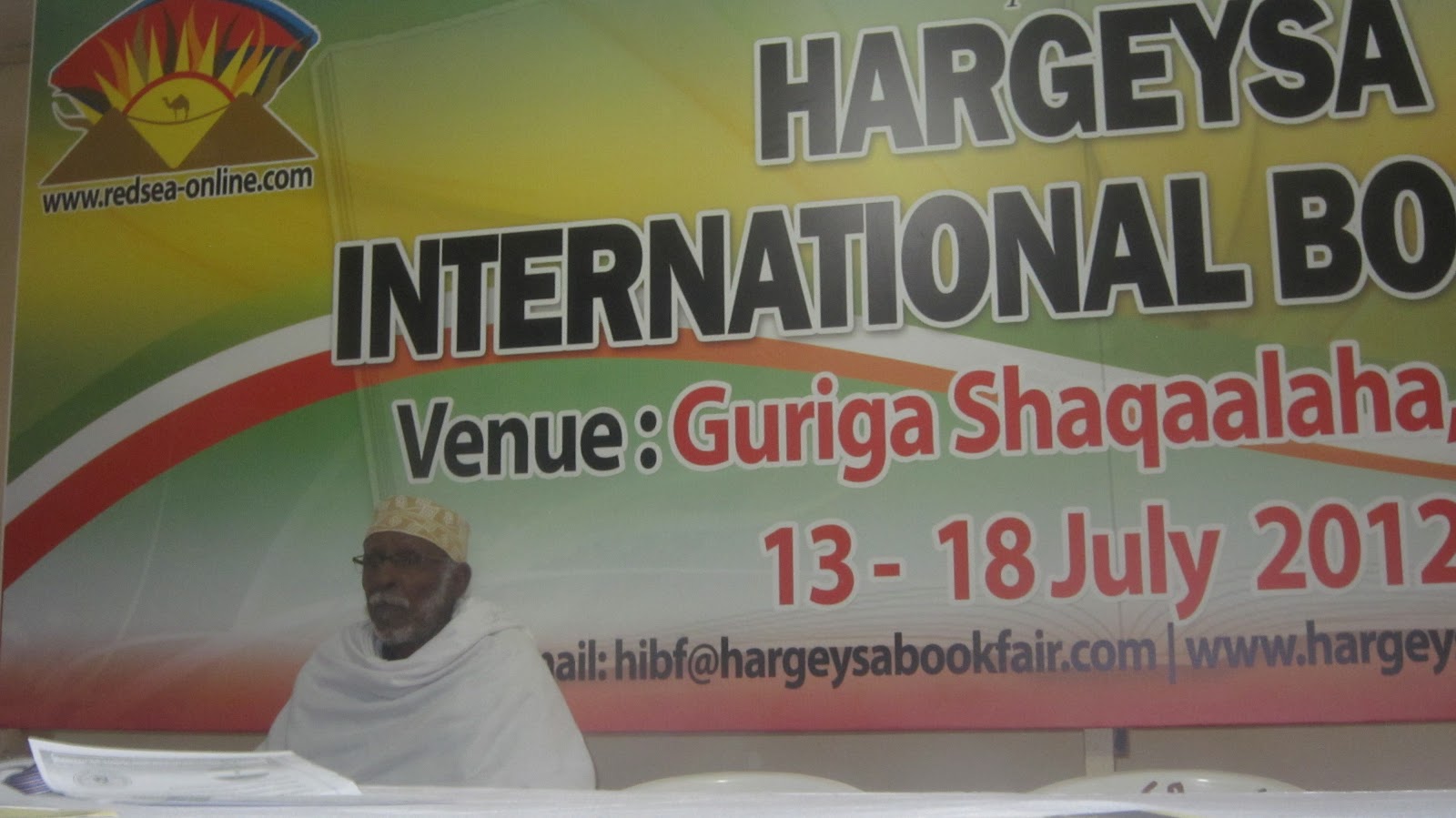
The Hargeisa International Book Fair is far more than a book fair. It is now in its fifth year running and hosts authors, poets, musicians, film-makers, artists, playwrights, actors and circus performers, both Somali and non-Somali.
The book fair is being held in the Working Men's Club in central Hargeisa, capital of Somaliland which declared itself independent from the rest of Somalia in 1991. The territory has built itself up from the rubble of war, has a growing economy and a functioning democracy.
 |
| The earth was sprayed with water from this donkey cart to stop things getting too dusty |
The book fair is the brainchild of Jama Musse Jama, a Somali who fled to Italy during the civil war which broke out in the late 1980s, has lurched through various incarnations and is still not over today. Jama lives in the Italian town of Pisa where he has a publishing house, a vibrant website and a family. He is the author of several books. He was until recently a lecturer in Mathematics at Pisa University. Now he works as a computer scientist. Oh, and he invented a computer game based on a traditional Somali board game called Shax.
 |
| Jama Musse Jama welcomes us to the book fair |
Ayan Mahamoud is the other force behind the book fair. She organises numerous Somali events in the UK and elsewhere, including London's Somali Week.
 |
| Ayan Mahamoud (in orange) and Zahra Ahmed, who help out at the fair |
|
Quman Akli has been working day and night to make sure the book fair runs smoothly. Here she is carrying a lute for Hudaydi, also known as the King of the Somali lute:
There are stalls selling books, paintings, photographs, handicrafts, clothes, cake and drinks. Mini-libraries have been set up so people can borrow books and read them in a specially designated seating area.
 |
| This man bought my book |
 |
| Locally published books for sale |
 |
| Scarves and incense for sale. I bought both. |
 |
| A singer outside a Somali hut |
 |
| There were many bookworms at the fair |
The book fair opened with Somaliland's national anthem and other songs.
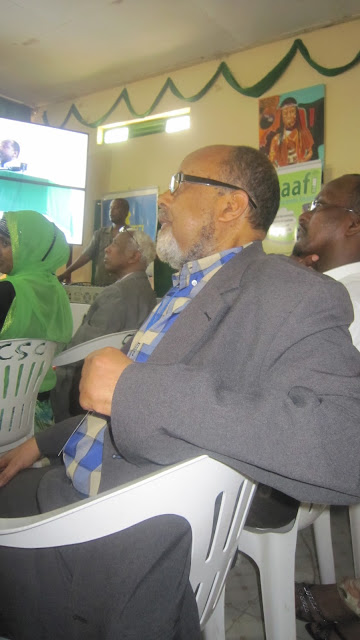
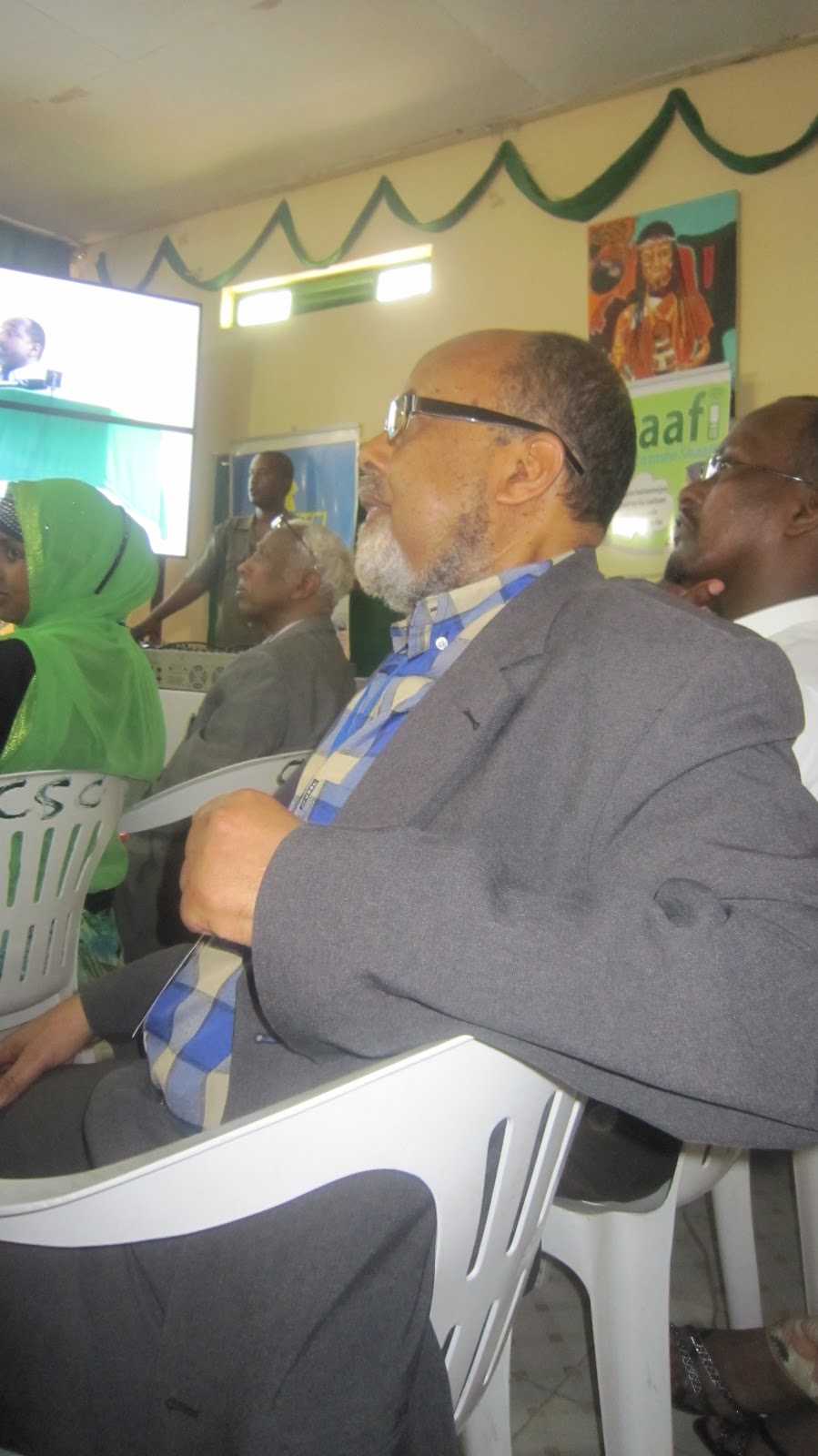
Then the famous Somali poet, Hadrawi, who had been sitting quietly on his own at the back of the stage, spoke to the crowd. The large hall was completely packed. Many people had to wait outside, so a big screen was set up for them to watch and listen to the presentations.
There were lots of fascinating books for sale at the fair including Somali translations of George Orwell's Animal Farm (launched last year) and Chekhov's short stories, which was launched this year.
 |
| Somali translation of Chekhov on top of Somali translation of Animal Farm |
|
The British-Somali author, Nadifa Mohamed, flew to the book fair from her home in London to talk about her award-winning novel Black Mamba Boy and her new novel (and even the idea for her third).
 |
| Nadifa Mohamed |
There are now proper yellow taxis in Hargeisa. Last time I came (earlier this year) there were only buses, informal taxis and private vehicles. I had my first taxi ride home from the book fair with Nadifa Mohamed and the Brazilian film-maker Iara Lee.
 |
| Nadifa in the driving seat |
 |
| Nadifa Mohamed, me and Iara Lee |
The Hargeisa International Book Fair: Day Two
Day Two started with the British-Somali writer Nadifa Mohamed talking about her novel Black Mamba Boy. She also spoke about her second novel which is now in its final stages. Its working title is 'Milk and Peace'. It focusses on the lives of two women and a little girl during Somalia and Somaliland's decline into civil war.
Nadifa also spoke about her third book which will be about the people who were born on the same night as she was in Hargeisa hospital in August 1981.
The book fair seemed even more crowded on day two. Young people from Readers' Clubs from all over Somaliland came to make presentations, read and buy books, meet authors, watch films, listen to music and engage in the debates.
 |
| Meeting young members of Somaliland's Readers' Clubs |
 |
| More bookworms |
It was then the turn of the organiser of the book fair, Jama Musse Jama, to speak about recent books he has published, including 'Essays in Honour of Muuse Ismaaciil Galaal' which he compiled. Other titles were also launched including 'The Vulture has Landed', a collection of short stories by Ahmed Ismaacil Yusuf. There was a fascinating discussion of Somali Studies by Dr Laura Hammond of SOAS, Dr Michael Walls of UCL and Ridwan Osman a PhD candidate at Cambridge University.
|
|
Jama Musse Jama and his new book
|
Then it was time for a true musical treat, a meeting of the great musical minds of the King of the Somali Lute, Hudaydi, and the New Orleans jazz musician, Evan Christopher. This was Evan's first visit to Africa.
 |
| The King of the Somali Lute, Hudaydi |
 |
| Evan Christopher |
|
The music was truly amazing, transporting the huge crowd to a place they had never before been. Here are a few recordings I made of the music:
The Hargeisa International Book Fair: Day Three
This was the day for the environmentalists:
The Somali environmentalist Ahmed Elmi
|
Amina Milgo presented her book on the environment and showed a film about how charcoal making is wrecking the environment, as are the plastic bags and other rubbish.
|
|
|
Hadrawi, Ahmed Ismaacil Yusuf and Jama Musse Jama enjoy the discussions
|
Helen Conford of Penguin Books spoke to the crowd about how local authors can write for an international audience. Nadifa Mohamed and I were on the panel, and shared our experiences:
Nadifa Mohamed and Helen Conford
|
Dr Laura Hammond of SOAS presented a new book on diasporas called 'Politics from Afar'. She said many Somalilanders are 'part-time diaspora' people as they spend equal time in the diaspora and in Somaliland.
Then it was time for me to speak about my book Getting Somalia Wrong?. It was the first time I have spoken about it on Somali soil. I broke the news that the Somali translation of the book has just been completed. This has been made possible by some generous Somalis, who have contributed their time, money and other resources. After it is thoroughly checked by Somali intellectuals from different parts of the Somali territories, it will be made available online for free by my generous publishers Zed Books.
 |
| My book (among others) on sale at the fair. It sold out twice! More copies are being flown in from Nairobi, Kenya and will be available for sale in the Oriental Hotel, Hargeisa. |
 |
| This young lady helped sell my book. |
It was a wonderful experience especially because my former BBC colleague, the great Somali journalist and thinker, Maxamuud Sheekh Dalmar, did the translating. This is his first trip home to Somaliland in 36 years. He has been receiving a hero's welcome.
My book has been for sale at the Maan-Soor Hotel
|
|
|
With VOA journalist, Ismail Hussein Farja
|
 |
| Another bookworm in a book fair baseball cap |
 |
| Listening to the debates |
 |
Organiser of the book fair, Ayan Mahamoud
We were then treated to some singing and dancing by a young music group: |
 |
| Dancing boys |
 |
| Nadifa and I took a ride on the bus |
 |
| Hargeisa bus (about 20 US cents a ride) |
 |
| The mosque at the venue was often full to bursting at evening prayer time |
 |
| Meeting old friends and making new ones |
I bought this bag made from discarded plastic bags
|
|
|
There were always lots of comments and questions. This young lady asked why so many books in schools were about Tanzania, Kenya and other parts of Africa, not about the Somali regions. She received loud applause.
|
Day Three ended with a screening of Iara Lee's film, Cultures of Resistance complete with Somali subtitles. Iara appeared in a beautiful cloth she had bought in Hargeisa and wrapped around herself.
 |
| Ayan Mahamoud introduces Brazilian-Korean film-maker Iara Lee |
Mosque outside the book fair venue.
|
Fresh local fruit on sale at the book fair
|
 |
| I bought some tea bags and hair conditioner at this very tidy and well-stocked supermarket |
 |
| The Hargeisa skyline is dominated by telephone wires, even though most people have at least one mobile phone |