Monday, 3 March 2014

Mental health in Mogadishu

In January this year I visited the Habeb mental hospital in Mogadishu. I reported on it for the BBC. Here is the script for my piece which was broadcast on From Our Own Correspondent - you can listen to it by clicking on this link: The Habeb mental hospital radio piece

You should also be able to listen here (Radio 4 version) or here (World Service version). I took the photos during my visit to the hospital.

And here is a link to an interview I recorded with Dr Habeb: Click here to hear Dr Habeb

Somalia has one of the highest rates of mental illness in the world, with one in three people suffering from some form of mental health problem, according to the World Health Organisation. This is perhaps not surprising given that the country has been in conflict for two and a half decades, and has come top of the list of the world's most failed states for six years in a row. Mental illness is a taboo is Somalia. Many mentally sick people are chained, some are even put into cages with hyenas as this is believed to cure them. One man has dedicated his life to helping Somalia's mentally ill, and to getting them out of their chains. Mary Harper visited him in Mogadishu:

"That must be it" I say, pointing at a yellow wall painted with a picture of a large blue human brain. "The Habeb Mental Hospital."

My driver pulls the car up as close as he can to a gate in the wall and tells me to wait. "Do not even think about opening the door" he says. My six bodyguards form a protective line from the vehicle to the hospital gate. When the word comes, I dart out and run between them, through the gate and into the hospital. This is Mogadishu, and you don't mess around.

I find myself in a room crammed with metal beds. The spare patches of floor are covered with foam mattresses. There stretched out, sometimes one, sometimes two, sometimes three to a mattress are men. It is the middle of the day but they are all lying down. Some are asleep, others stare at me with dead eyes. They do not seem to be fully alive.


The heavy stillness is broken when a man rushes in, dressed in a white coat. It has obviously seen better days, but it is clean and freshly pressed. His eyes sparkle. He gesticulates energetically. His voice is strained and high-pitched. 


This is Habeb. The nurse, with three months mental health training, who runs this hospital. Habeb means in Somali "a voice which seems to be running out", and that is just what his voice sounds like - as if there's not much left of it.

"There are 132 patients in here" he says. "Most of them are suffering from Post Traumatic Stress Disorder. Many have schizophrenia. Their families bring them here years too late. And they all come here with their legs and arms in chains because that is what Somalis do with mental patients. Here we have a no chains policy. Nobody in my hospital is chained."

The men on the beds and the mattresses on the floor do not react. I ask Habeb why they are all lying down.

"Because this morning they had psychotropic drugs. They are all happy now. Up until two years ago the World Health Organisation gave us drugs. But then they stopped for lack of funds. Now I buy them in the local market."

Suddenly Habeb starts to weep. His voice gets even higher; it cracks and breaks. Tears are pouring down his face. His nose is streaming.

"Where is the United Nations? Where is Ban Ki Moon? Where is the Somali president, the prime minister, the parliament? They all say Habeb is a good person, Habeb is a hero. But I don't need words. I need action."

I give Habeb my hankerchief and we go into another room. Above the doorway, written in swirly writing in black paint are the words 'women's ward'. It is even quieter, even stiller. The same dead eyes, the same prostrate bodies. 


Habeb sits with one lady, her head uncovered, her hair shorn. He holds her hand.


"She has post-natal depression, schizophrenia and anorexia. She can't sleep, she talks to herself, she has hallucinations and she hears voices. When she came here, she was a skeleton. She weighed 31 kilos (70 pounds/ 5 stone)."

We leave the women's ward and walk outside. The sun is warm and bright. The odd burst of gunfire goes off somewhere not too far away. Habeb tells me how in the past few years at least 300 mental patients have been shot dead by the security forces in Mogadishu. They don't know that it is not safe to walk around at night. That you should stop at checkpoints. So they get shot.


In a covered area -- that is a bit like a barn for animals -- I find dozens more male patients. Some of them are alert. A group of young men approaches me. They speak English, in a variety of accents. They tell me how they fled Somalia with their families when war broke out two decades ago. To Canada, to Holland, to Cardiff, to London. I find it odd that so many Somalis from the diaspora are here in this mental hospital in Mogadishu. Some it seems were sent to Somalia by their families after they got into trouble at home. Others came to try to start a life here.


Habeb starts telling me about how he started the hospital after he saw five mentally ill women on the road being abused by small children, who shouted harsh words at them and threw stones. A young man -- also in a white coat -- interrupts him and takes up the story.

"I am Mohamed Habeb, son of Habeb. When I was a child, I used to keep birds. One day my father came and took two of my birds. I was very upset. He took them to market and sold them for a dollar each. With those two dollars, he paid an artist to paint the name 'Habeb Hospital' above one room. That is how he started the hospital."


Sunday, 16 February 2014

Ruin Lust


The London art gallery, Tate Britain, is having an exhibition about how artists love painting, drawing, sculpting, photographing ruins. 

When I saw the poster I immediately starting thinking about Mogadishu. The way ruined concrete, bricks and stones start to decay, almost as if they are rotting. 

As you can see from my photos below, artists would have their RUIN LUST sated in Mogadishu.


Parliament


Cathedral


Post office


Mosque


Monument


Theatre


Library


Pasta factory


Mosque


Cathedral


Monument


Saint Francis of Assisi


Dentists


I don't know what this was/ is except that it's in Hodan district


I don't know what this was/ is except that it's in Hodan district


Jesus


Italian municipal building


Mosque

Wednesday, 5 February 2014

New Year in Mogadishu - a photo diary


The old pasta factory in north Mogadishu, later used as an operations centre by Al Shabaab

Heading towards the livestock market in Huriwa district, north Mogadishu

Huriwa district, north Mogadishu

Old building...

New building


Open air cinema


Mental hospital


Mental hospital

Florist's shop

The florist of Mogadishu


Portrait of the president

Talking to the president

Double suicide car bomb damage

Repairing the damage


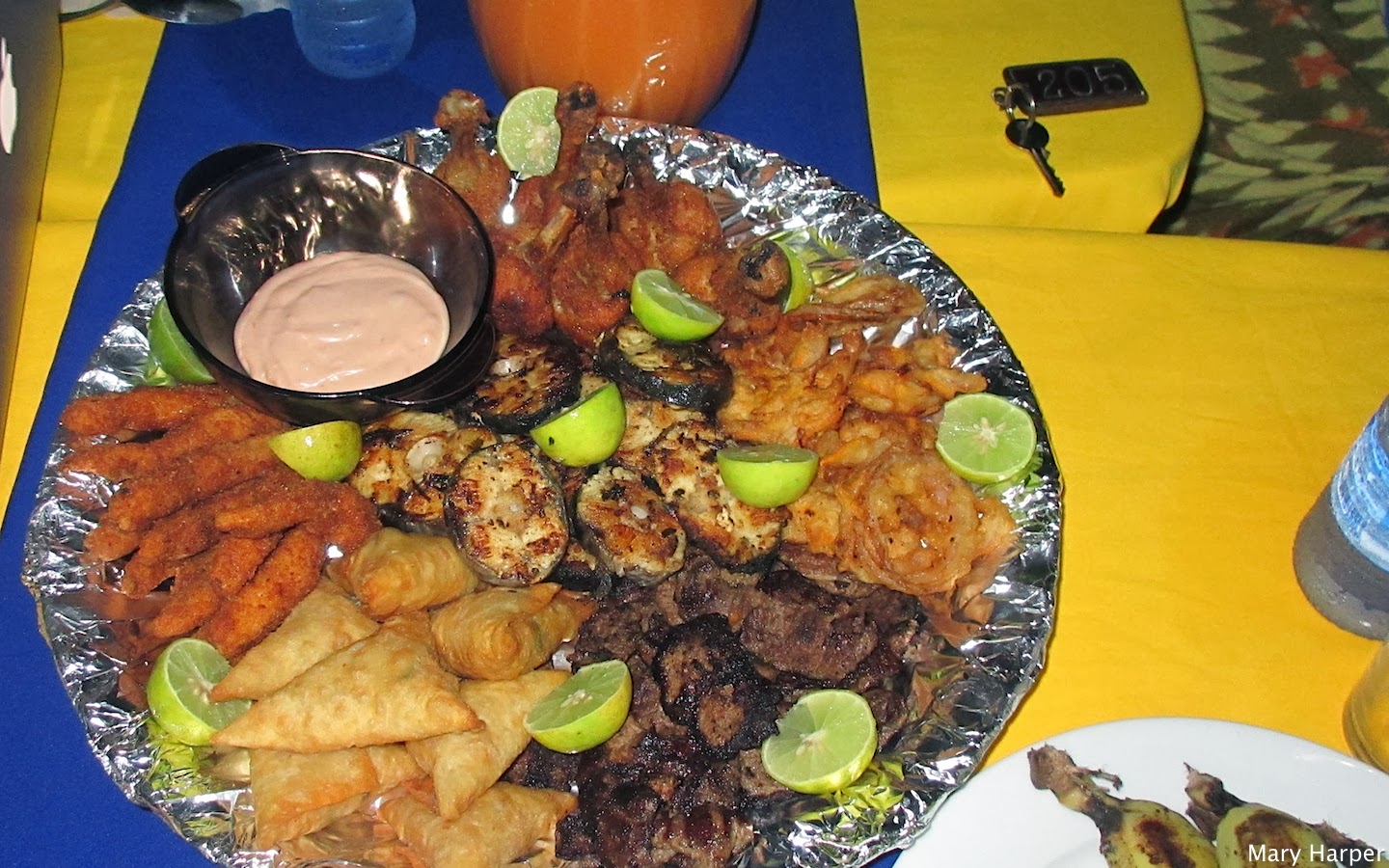
New Year's Eve feast

Local Lobster

Beach south of Mogadishu

Beach south of Mogadishu

Sunday, 2 February 2014

Portugal and Angola

Here is a link to a programme I made for BBC Radio Four about how Portuguese people are fleeing economic crisis at home to seek their fortunes in their former colony of Angola.

BBC Radio Four: Return to Angola

Sunday, 5 January 2014

From Somalia to Siberia… on ice… via Sweden.

Somalis are going to Siberia… on ice… via Sweden! They are going to be the first and only African team competing in the World Bandy Championships. 

I had the good fortune to visit Sweden to report on this amazing story for the BBC. 

I went to Sweden with two BBC colleagues, Tim Mansel whose idea it was and who was the producer, and Nick Woolley who directed, filmed and edited this wonderful film:


And here is a report I did for BBC TV:

My TV piece

Click on the link below for my radio piece:

My radio report

Here is a piece I wrote for the BBC's From Our Own Correspondent programme:

Bandy is not a game many people know. It’s basically ice hockey writ large – played outdoors on a sheet of ice the size of a football pitch. So the countries that win World Championships are generally those from the frozen north – places like Sweden, Finland and Russia. But in this year’s world championships beginning in January there’ll be a new contender. They won’t win many games. But they’re likely to win a lot of new friends. Mary Harper has just been to Sweden to meet the national bandy team of…Somalia.

There, stretching out in front of me is a giant, smooth sheet of ice. It’s the size and shape of a football pitch, with a little net goal at either end.

It’s night-time and the sky is pitch black. But the perfect white of the ice seems to glow from the inside, as it’s lit by floodlights which swing above it, stretched across on wires.

It’s still and quiet. I can just make out tall pine trees standing like silent guards around the pitch.

Suddenly the peace is broken.

Figures in bright colours swarm onto the ice. I hear the whoosh and scrape of skates. The thwack of wooden sticks hitting a ball. The occasional thump of a body coming down hard.


This is bandy, Sweden’s winter sport. It’s a bit like ice hockey. But played with a bright pink ball instead of a puck. And there’s that huge pitch, which the players whizz around in this fast and furious game.

The voice of the coach travels loud and clear through the night air. And it’s then I notice something strange. We’re in a small Swedish town, playing a very Swedish game. But the coach is the only white face on the pitch.

Everyone else is black. And they’re speaking a language I recognise. Somali.

This is the Somali National Bandy Team, and its headquarters is right here in the Swedish town of Borlenge. 

In a few weeks time, this team here on the ice is going to Siberia. To represent Somalia in the world bandy championships. The very first time an African country will do so.

Ahmed Hussein is a member of the team. He’s wearing a big red top that billows around his slight frame. He has an impossibly engaging smile, with deep dimples in his cheeks.

“I grew up in Mogadishu,” he says, “where the only thing I knew about ice was as something to put in my Coca Cola”.

From left to right: The producer Tim Mansel, bandy player Ahmed Hussein, cameraman and editor Nick Woolley and the man who dreamed up the idea of Somali bandy Patrick Andersson.
Ahmed tells me that a few months ago, not a single member of the team knew how to skate, let alone play bandy. How a man called Patrick came to him and a group of friends and told them about this weird game.

Patrick is standing on the sidelines. “I was worried about the segregation of the Somalis and Swedes in my town. There were riots across Sweden a few months ago in suburbs dominant by immigrants. Some time after that, I was having a few beers with friends when I came up with the idea of a Somali bandy team. This would get people talking to each other.”

Patrick, Ahmed and the Somali Bandy vehicle which zooms around Borlange


And it certainly is. Something especially important in a town like Borlenge, where close to 10 percent of the population is Somali, and growing every day as there are more than 30 new arrivals from Somalia each month.

A Somali community worker, Mursal Isse, takes me for a walk around the area where most Somalis live. “This is a Swedish Mogadishu,” he says.

'Sweden's Mogadishu' - the area in Borlange where most of the Somalis live

I see a woman in typical Somali dress. A long gown, a large veil. She’s holding hands with her small children. A boy and a girl, bundled up warm in thick snowsuits, their big brown eyes peeking out from tightly tied hoods.

“Aren’t your freezing?” I ask. Shyly, she lifts up the bottom of her veil. Underneath is a big black coat.

Even though it’s so cold and so quiet, so utterly different from Somalia, not one of the Somalis I meet complains about life in Sweden. Many talk of the value of a Swedish education, and the young are ambitious. One wants to be an architect, another a stockbroker.

This is very different from Britain where Somalis often talk of police harassment, of how some of their boys choose crime over school. Of course it’s not perfect in Sweden, but there are lessons to be learned.

Back on the pitch, I ask the coach, Per Hosshaug – a legendary bandy player and five times world champion – how he got the boys to this standard in such a short time.

“They have courage. They have lived through things we don’t even want to dream about. So getting on skates was nothing for them.”

As the team trains for Siberia, I notice a Somali teenager on the edge of the ice. He’s wearing skates, shuffling his way forward. This is the second time he’d ever tried.

A graceful figure glides towards him. Dressed all in black, a short, fur coat belted elegantly at the waist. A black hat decorated with a glamorous black flower. She takes the Somali boy’s hands, and pulls him forwards. Shows him how to skate.

The figure skater who teaches the Somalis how to skate
Like everyone else involved with the Somali bandy team, this Swedish figure skater is a volunteer. She’s going with them to Siberia.

They’re not going to win. They might not even score a goal. But that’s not the point. Something very special is happening on the ice in this small Swedish town, which has nothing to with winning or losing. It’s getting two very different communities to talk to each other, and to live together.